Complete reference for every parameter of the Nextedy SCHEDULER widget, with the value each one carries out of the box.
Almost everything about a Scheduler board is configured through the widget’s parameter panels. The one setting that reaches a board from outside them is the project configuration property behind the Days Back and Days Forward defaults, noted under Advanced below.
This page lists every parameter the widget exposes, what it changes on the board, and the value it starts with.
Open the Tools panel of the page (Expand Tools in the page header).
2
Switch the page to edit mode
Click Edit.
3
Select the widget
Click the Scheduler widget on the page.
4
Open its parameters
Choose Edit widget parameters.
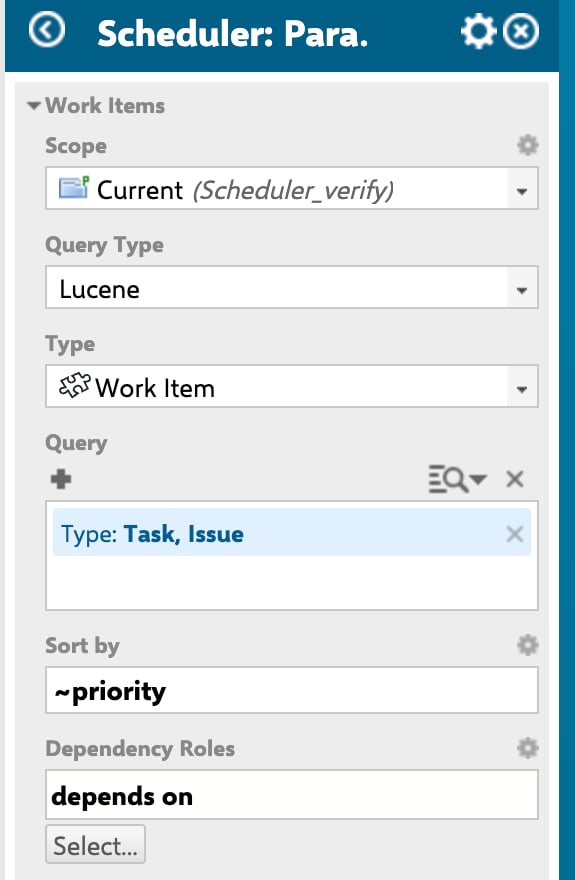
The panels appear in this order: Work Items, Data Mapping, Queries, Swimlanes (Rows), Unplanned Sidebar, Create New Work Item, Advanced.
Data Mapping and Advanced start collapsed, so click the panel heading to open them.
The parameter panel opens on Work Items; the remaining panels follow below it, and Apply at the foot commits the changes to the page.
Parameters are stored on the page, not on the project.
Two pages in the same project can host two Scheduler boards configured completely differently — for example one grouped by user and one grouped by an enumeration field.
This panel defines which work items reach the board at all, and how their effort is read.
Parameter
What it does
Default
Work Items
Polarion’s standard work-item data set: the scope and the query. Everything the query returns becomes the task pool — items with usable dates land on the timeline, the rest land in the Unplanned sidebar
None — you supply the scope and query
Sort by
Field the work items are read in
id
Dependency Roles
Which work-item link roles Scheduler treats as dependencies. Leave it empty and the Add Link handle and the Show Dependencies toolbar control never appear
None
Plans Type
Which effort figure drives the load markers and the effort shown on each card. Three options: Initial Estimate, Remaining Estimate, Remaining Estimate + Time Spent
Remaining Estimate
Sidebar Fields
Fields rendered on the cards in the Unplanned sidebar
Title
Tooltip Fields
Fields listed in a task’s hover tooltip, below the title and date range
Project, Type, Status, Assignee(s)
A board built from the demo project template arrives with Remaining Estimate selected.
Remaining Estimate + Time Spent is the option to pick when you want the board to reflect work already burned as well as work still ahead.
See Dates, Duration and Effort for how each mode is calculated.
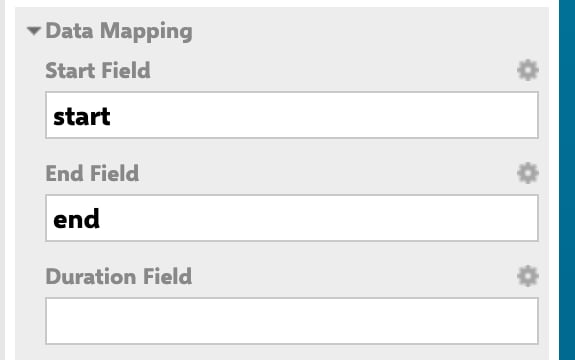
Scheduler needs to know which work-item fields hold a task’s schedule.
Set exactly two of the three parameters below; the third is derived.
Parameter
What it does
Default
Start Field
Work-item field holding the task’s start date
start
End Field
Work-item field holding the task’s end date
end
Duration Field
Work-item field holding the task’s duration in working days
Empty
The combination you set decides how a bar’s extent is worked out:
Fields set
How the bar is placed
Start Field + End Field
Both dates are read straight from the work item
Start Field + Duration Field
The end is the start plus the duration, counted in working days
End Field + Duration Field
The start is the end minus the duration, counted in working days
A duration of zero is treated as one day.
Dragging a bar moves it — it never stretches it.
Duration is changed on the work item, through whichever field you mapped here.
See Schedule and Reschedule Tasks.
A repeatable list of named queries. Each entry has a Name and a Query; the names appear under Queries in the Unplanned sidebar’s funnel filter, so a planner can narrow the backlog with one click
None
The funnel filter shows these entries under Queries, alongside Polarion’s own saved queries in the Global Queries and Project Queries groups.
See Filter the Unplanned Sidebar.
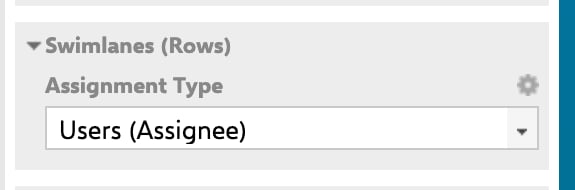
What the rows of the board represent. Two options: Users (Assignee) — one row per project user — or Enumeration Field — one row per option of an enumeration field
Users (Assignee)
Field ID
The enumeration field whose options become rows. Shown and used only in Enumeration Field mode
team
In Users (Assignee) mode the panel carries Assignment Type alone.
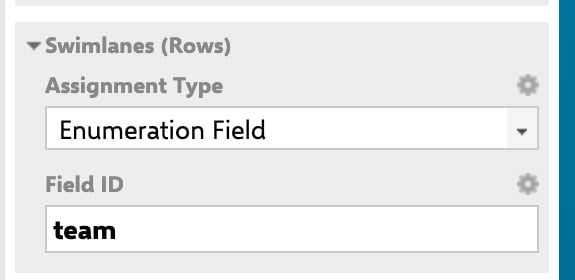
Selecting Enumeration Field reveals Field ID, pre-filled with team.
The field named in Field ID must exist in the project as an enumeration.
With the default team on a project that has no such enumeration, the board reports a field error instead of drawing rows.
Point Field ID at an enumeration your project actually defines — see Configure Swimlanes.
Status, resolution and type fields are rejected as swimlane fields; the board reports this rather than drawing rows.Row capacity differs by mode: user rows carry 8 hours per day, enumeration rows 24 hours per day.
See Capacity and Load.
How many levels of parent work items to load for the sidebar. Above 0, sidebar cards are grouped under their parent’s heading, with everything else under a no-parent group
0
Parent Roles
Which link roles are followed to find a card’s parent
None
Width (%)
Width of the sidebar as a percentage of the widget’s width; the timeline takes the remainder
20
Parent grouping needs three things together: a Load Parents depth above 0, at least one role in Parent Roles — those are the roles followed upwards to find a parent — and at least one role in Dependency Roles.
Whether a planner can create work items directly on the timeline, by double-clicking an empty cell or dragging across one. Off by default — the board is read-and-schedule only until you turn this on
Project role a user must hold to get a swimlane row, in Users (Assignee) mode. Clear it to give every project user a row
project_user
Days Back
How many days before today the timeline window starts
10
Days Forward
How many days after today the timeline window ends
100
Old as Unplanned
When on, a work item whose start date falls before the beginning of the timeline window is shown in the Unplanned sidebar instead of on the board, so stale dates do not sit off-screen
On
Max Items
Upper bound on how many work items the board loads from the query
500
Card Height
Height of a task card in pixels. Raise it when your Tooltip Fields or titles need more room
50
Show Time Points
Whether the board reserves a bottom row for Polarion time points
On
Config Script
Velocity script evaluated on the server and injected into the page, for board-wide adjustments
Empty
Item Script
JavaScript evaluated once per work item, in a read-only transaction. Sets per-item flags such as cli.readonly and cli.hide
Empty
Set Days Forward explicitly on every board.
Left empty, its fallback value comes from the same configuration setting that supplies the Days Back default, so the forward window may not be the 100 days you expect.
An explicit value is always honoured — the footer’s Timeline range line tells you which window is actually in force.
The Show Time Points row is populated from legacy Polarion time points.
On current Polarion versions, plan objects such as iterations and releases are not returned as time points, so the row does not appear even when the parameter is on and a plan falls inside the window.