Install and reload a Nextedy product license in Polarion — via the admin UI or the filesystem — and configure named and concurrent users.
Once you receive your license file by email, you can install it for the relevant Nextedy product. There are two ways to do this — through the Polarion administration UI (recommended) or directly on the filesystem — followed by configuring which users the license applies to.Throughout this guide, replace PRODUCTNAME with the product you are licensing (for example, powersheet, risksheet, gantt, planningboard, or checklist).
Nextedy AI does not follow the PRODUCTNAME pattern. Its license file name ends in nextedy-ai_lic.json, and its user groups are nextedy_ai_users and nextedy_ai_users_concurrent. See Install the Nextedy AI License.
Most Nextedy products — currently Powersheet, Risksheet, Gantt, Planningboard, and Checklist — let you install the license directly from the Polarion administration interface.
1
Open the License page
Go to Polarion Administration → Nextedy PRODUCTNAME → License.
2
Upload the license file
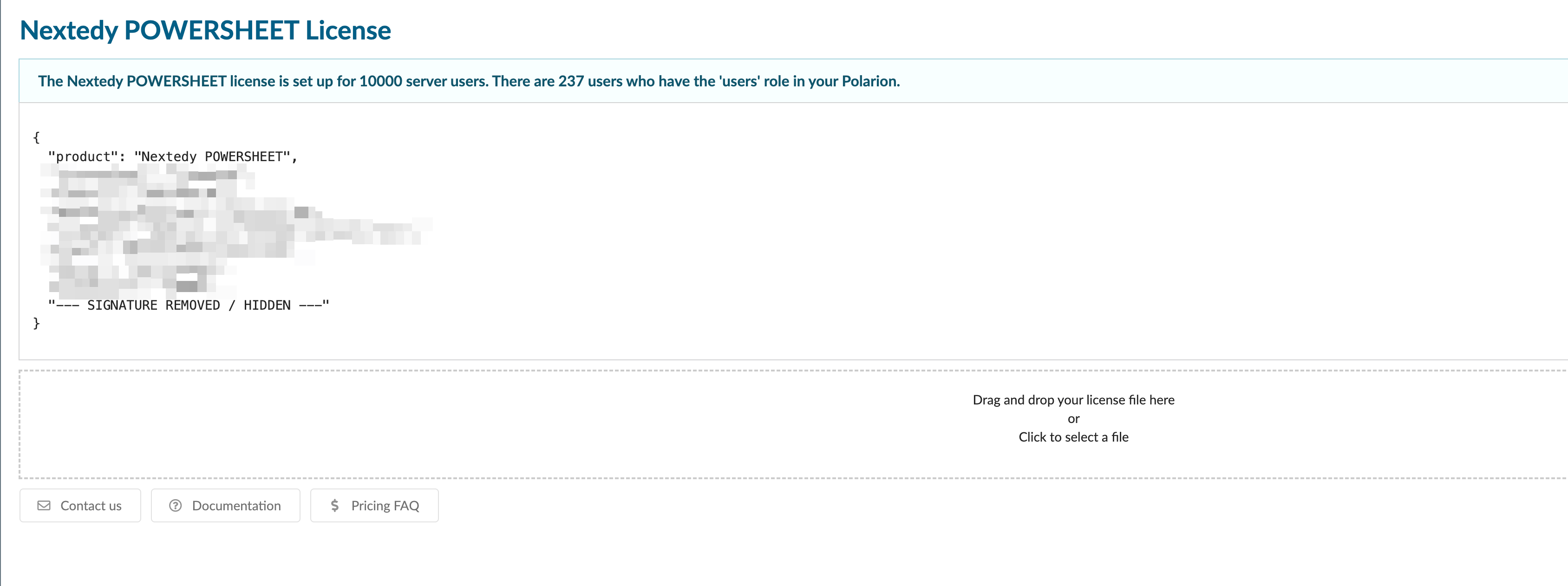
Drag and drop the license file onto the upload dialog, or select it from your file system. It is uploaded automatically and added under the correct repository.
The license upload dialog in Polarion Administration.
3
Resolve any upload errors
If the license file is invalid, a pop-up message explains what went wrong during the upload.
Older versions of Nextedy products use the following filesystem-based deployment.
1
Verify the license file name
Ensure the license file name ends with PRODUCTNAME_lic.json — for example, YOURCOMPANY-gantt_lic.json or YOURCOMPANY-risksheet_lic.json.
2
Copy the license file
Move the license file to the following folder on your Polarion server:
[POLARION_INSTALL]/polarion/license
This is the same directory where the main Polarion license is stored.
3
Reload the license
You do not need to restart the Polarion server. Simply navigate to Polarion Administration → Nextedy PRODUCT_NAME → License to reload the license file.
4
Select active users (if applicable)
Some Nextedy products require a selection of active users. In that case, open the Polarion Administration → Nextedy PRODUCT_NAME → License page and follow the instructions there, or refer to Configure named (active) users below.
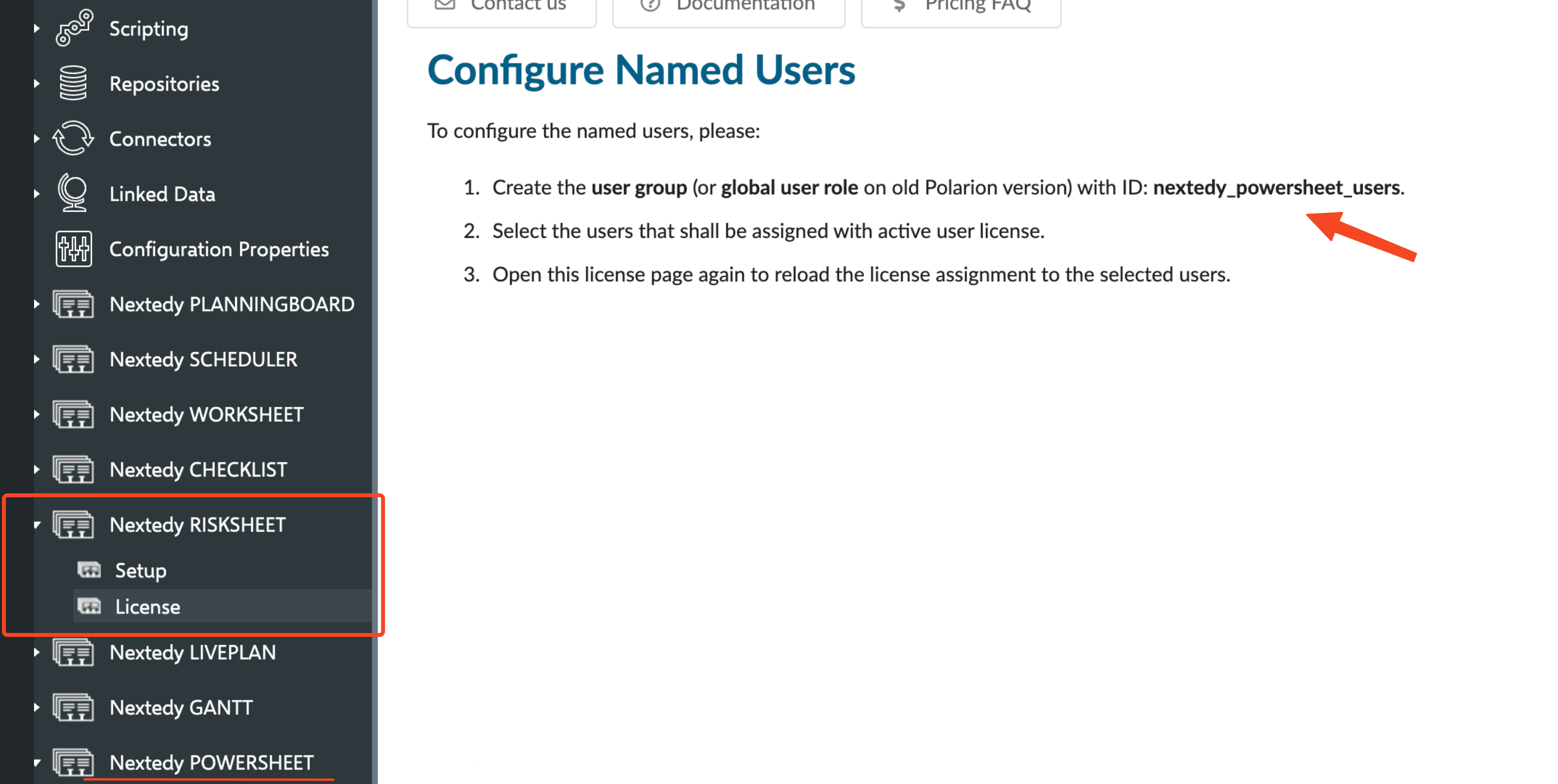
Create a user group (Polarion Administration → User Management → Groups) or a global user role (Polarion Administration → User Management → Roles) with the ID nextedy_PRODUCTNAME_users.
2
Add the users
Add the users who should be assigned an active user license to this group or role.
3
Reload the configuration
To reload the updated configuration, reopen the License page: Polarion Administration → Nextedy PRODUCT_NAME → License.
If you don’t perform this reload action, the newly added users will not receive an active license.
Create a user group (Polarion Administration → User Management → Groups) or a global user role (Polarion Administration → User Management → Roles) with the ID nextedy_PRODUCTNAME_users_concurrent.
2
Add the users
Add the users who should be assigned a concurrent user license to this group or role.
3
Reload the configuration
To reload the updated configuration, reopen the License page: Polarion Administration → Nextedy PRODUCT_NAME → License.
You can add more users to the concurrent users group than the number of licenses you purchased. The concurrent license is assigned to the users from that list who log in to the system first.
If your server has a production license for both Risksheet and Powersheet, you only need to configure one Powersheet users group (named or concurrent, depending on your license). There is no need to create a separate group for Risksheet — it is ignored.This is because the Risksheet active user license is provided free of charge: it is bundled with Powersheet active user licenses.As a result, both Risksheet and Powersheet check the nextedy_powersheet_users or nextedy_powersheet_users_concurrent groups.
With both products installed, only the Powersheet user group is configured.
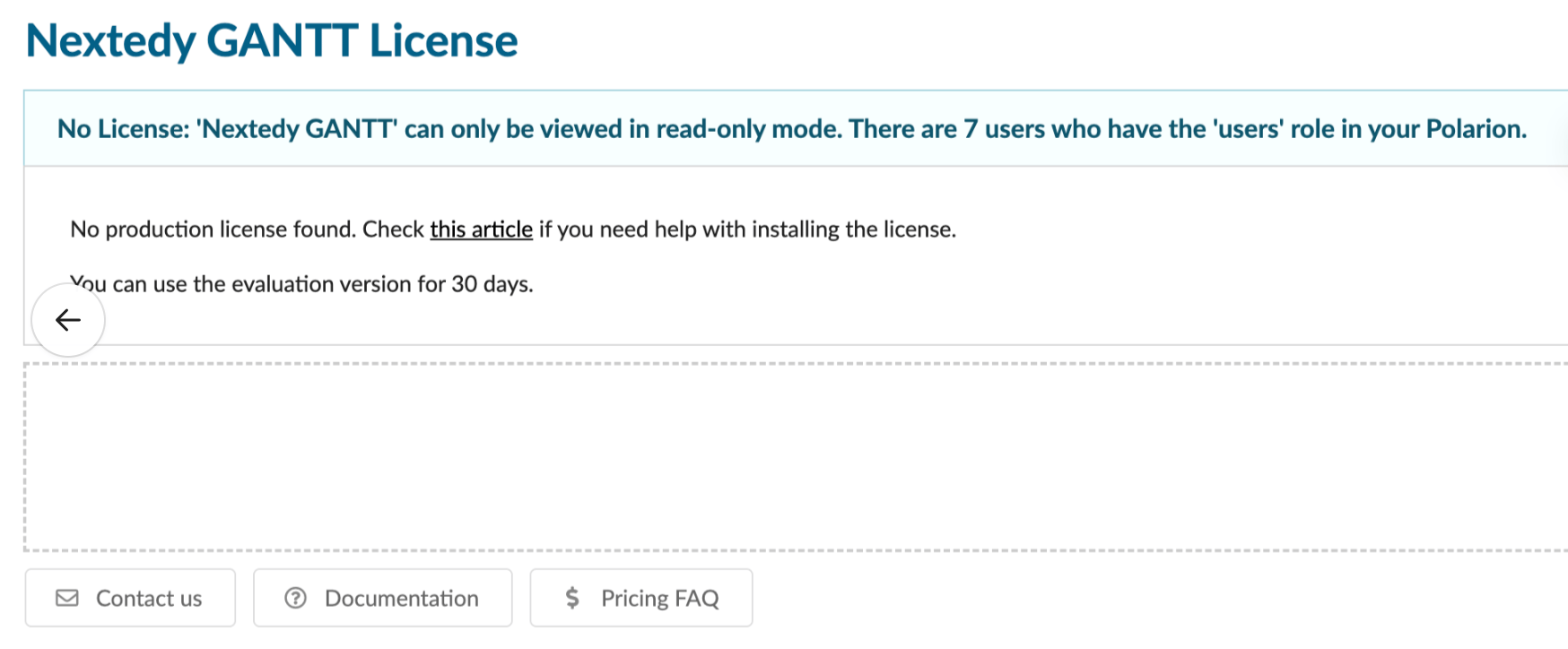
If you don’t have a production or evaluation license for a specific Nextedy product, the product is shown in a read-only view. You can see all the content, but you cannot actively manipulate the data.The License page signals that there is no active license.
The License page indicates that no active license is present.
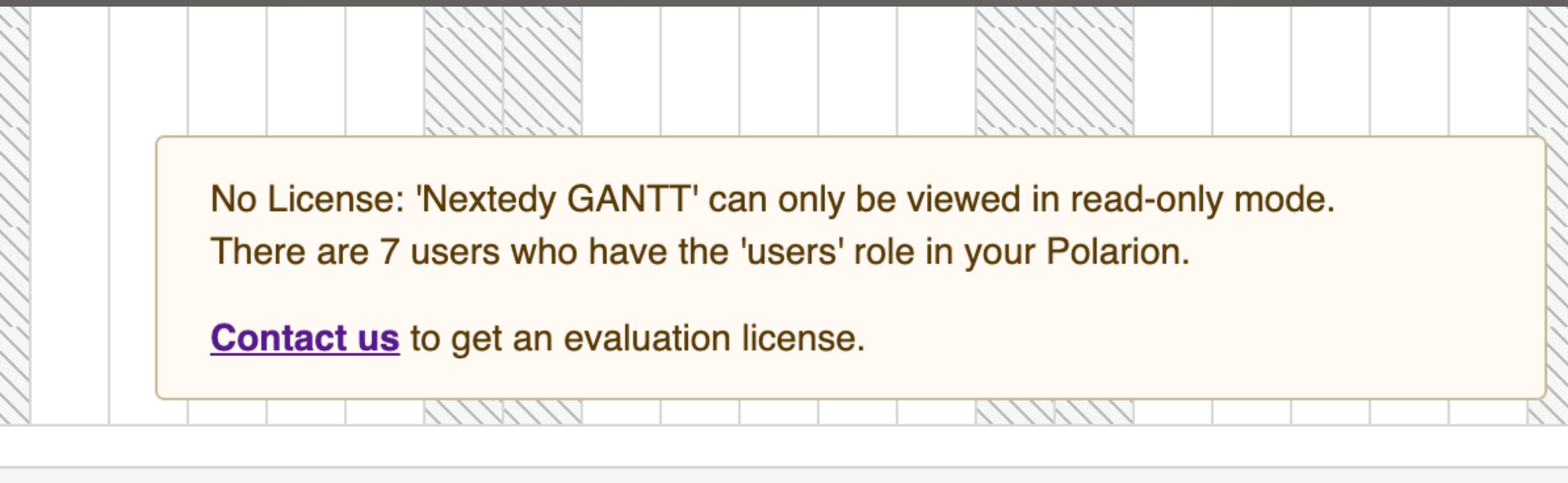
On the product page itself, a similar pop-up appears. You can request an evaluation license by following the Contact us link.
The product page prompts you to request an evaluation license.
The license upload procedure is the same for both production and evaluation licenses. However, once an evaluation license expires, the product switches back to the read-only view. You’ll see the pop-up notification when the license expires.